New Android Malware 'FluHorse' Targeting East Asian Markets with Deceptive Tactics

Various sectors in East Asian markets have been subjected to a new email phishing campaign that distributes a previously undocumented strain of Android malware called FluHorse that abuses the Flutter software development framework.
"The malware features several malicious Android applications that mimic legitimate applications, most of which have more than 1,000,000 installs," Check Point said in a technical report. "These malicious apps steal the victims' credentials and two-factor authentication (2FA) codes."
The malicious apps have been found to imitate apps like ETC and VPBank Neo, which are used in Taiwan and Vietnam. Evidence gathered so far shows that the activity has been active since at least May 2022.
Various sectors in East Asian markets have been subjected to a new email phishing campaign that distributes a previously undocumented strain of Android malware called FluHorse that abuses the Flutter software development framework.
"The malware features several malicious Android applications that mimic legitimate applications, most of which have more than 1,000,000 installs," Check Point said in a technical report. "These malicious apps steal the victims' credentials and two-factor authentication (2FA) codes."
The malicious apps have been found to imitate apps like ETC and VPBank Neo, which are used in Taiwan and Vietnam. Evidence gathered so far shows that the activity has been active since at least May 2022.
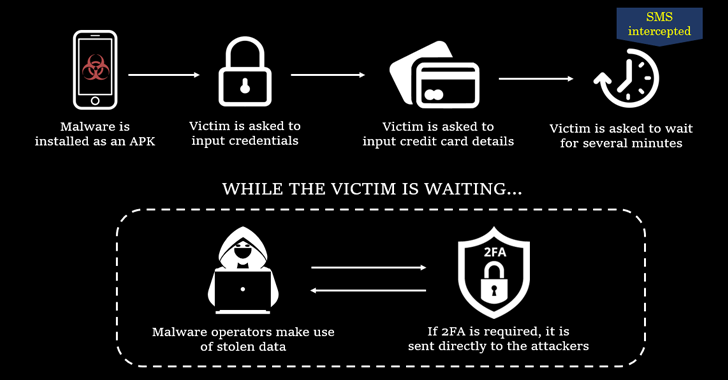
The threat actors also abuse their access to SMS messages to intercept all incoming 2FA codes and redirect them to the command-and-control server.
Interestingly, the malicious functionality is implemented with Flutter, an open source UI software development kit that can be used to develop cross-platform apps from a single codebase.
While threat actors are known to use a variety of tricks like evasion techniques, obfuscation, and long delays before execution to resist analysis and get around virtual environments, the use of Flutter marks a new level of sophistication.
"The malware developers did not put much effort into the programming, instead relying on Flutter as a developing platform," the researchers concluded.
"This approach allowed them to create dangerous and mostly undetected malicious applications. One of the benefits of using Flutter is that its hard-to-analyze nature renders many contemporary security solutions worthless."
M.B


Comments
Post a Comment